

America’s Changing View of the World — and What It Means for Communicators
For much of the postwar era, many Americans disagreed about various foreign policy issues while sharing a common understanding of the United States’ place in the world. Research shows that consensus is eroding.
Recent Pew Research Center data finds Americans are increasingly divided on questions that once attracted broader agreement: whether the United States is respected internationally, whether its influence is growing or declining, whether it contributes to global peace and stability, and whether it takes other countries’ interests into account when making foreign policy decisions.
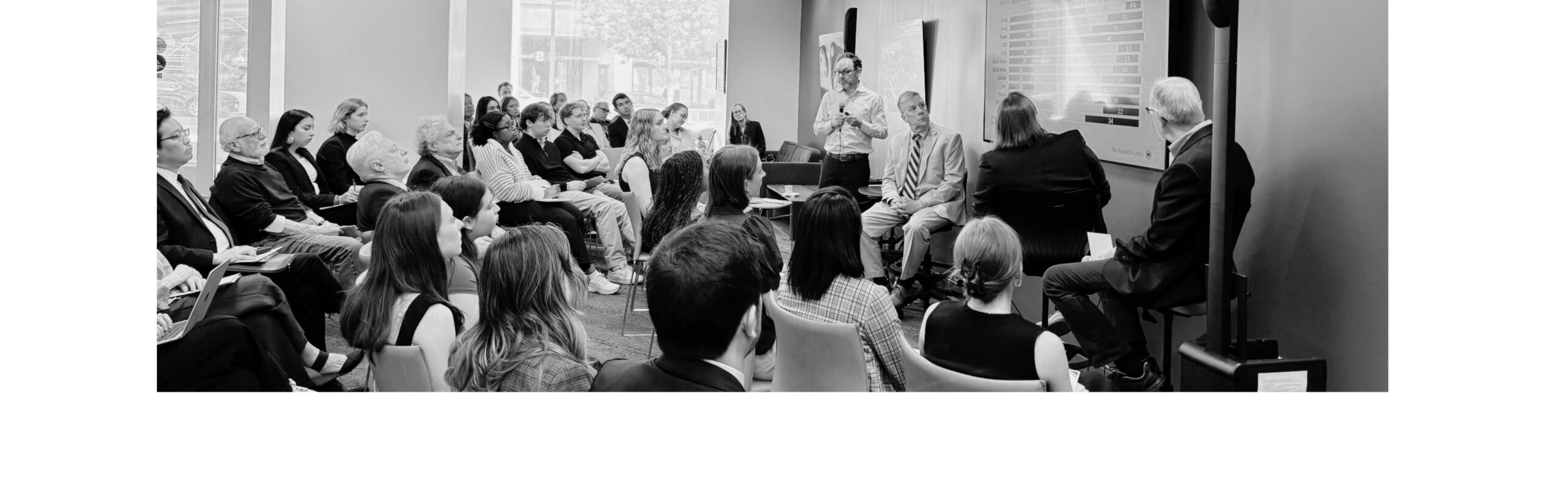
Those questions were the focus of a recent discussion hosted by The Fratelli Group and Syracuse University’s Institute for Democracy, Journalism & Citizenship, featuring insights from journalists Dan Balz and Margaret Talev, Pew Research Center’s Richard Wike and The Fratelli Group’s own Pete Janhunen. The research and ensuing discussion provided more than just a snapshot of public opinion; they illuminated some of the instincts, anxieties and assumptions Americans bring to conversations about international affairs — context that is critical to understand when communicating with U.S. audiences.
One of the most striking findings concerns how Americans view the exercise of American power. For the first time since Pew began its polling in 2002, a majority of Americans (53%) say the United States does not take other countries’ interests into account when making foreign policy decisions. That figure has nearly doubled since 2023, rising from 27% to 53%.
The shift is not evenly distributed. The share of Democrats who say the United States does not take other countries’ interests into account when making foreign policy decisions has risen from 42% in 2023 to 76% today. Meanwhile, Republican views have remained comparatively stable. Similar divides appear across a range of measures, from whether the United States is respected abroad to whether it contributes to global peace and stability.
Changes of this magnitude exemplify that Americans’ views on the United States and the world are not static. Increasingly fragmented media narratives shift public opinion on a daily — if not hourly — basis. For members of the diplomatic community and others communicating with American audiences about international affairs, this reality creates challenges and opportunities.
Beyond keeping pace with the rapid news cycle, the challenge is keeping up with how audiences are interpreting those events. The opportunity is that organizations that understand those shifts — and know where their audience is — can move beyond reactive communications and play a more active role in shaping the conversation.
Learn more about how to tell your story in our fragmented media environment in our blog post.